
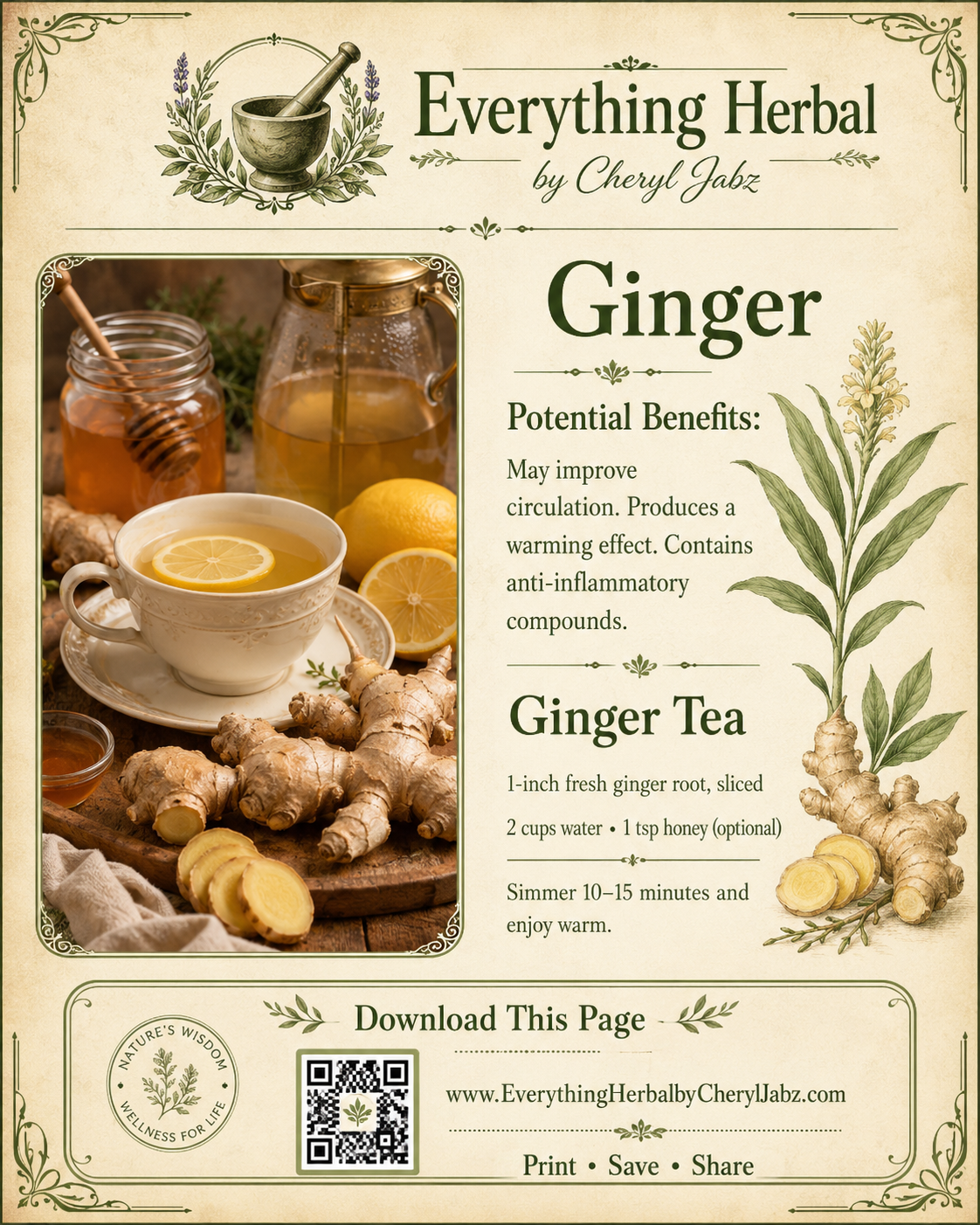
Ginger Tea
Ginger Tea is a warm, spicy drink made with fresh ginger and optional honey. It is soothing, comforting, and traditionally enjoyed to support digestion, warmth, and healthy circulation.
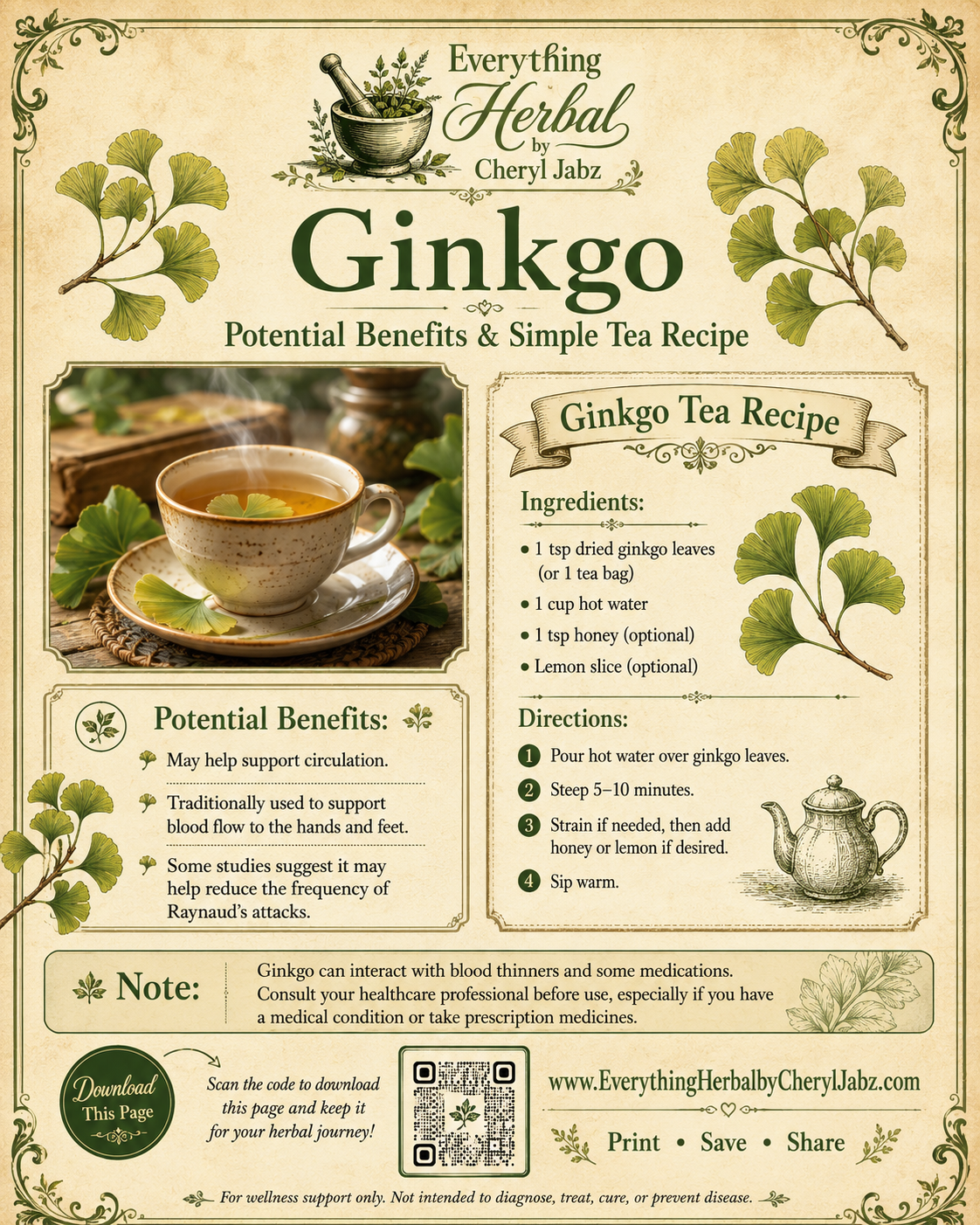
Ginkgo Tea
Ginkgo Tea is a mild herbal drink traditionally used to support circulation, especially to the hands and feet. It has a light, earthy flavor and can be sweetened with honey or lemon. Ginkgo may interact with blood thinners and other medicines, so check with a healthcare professional before use.
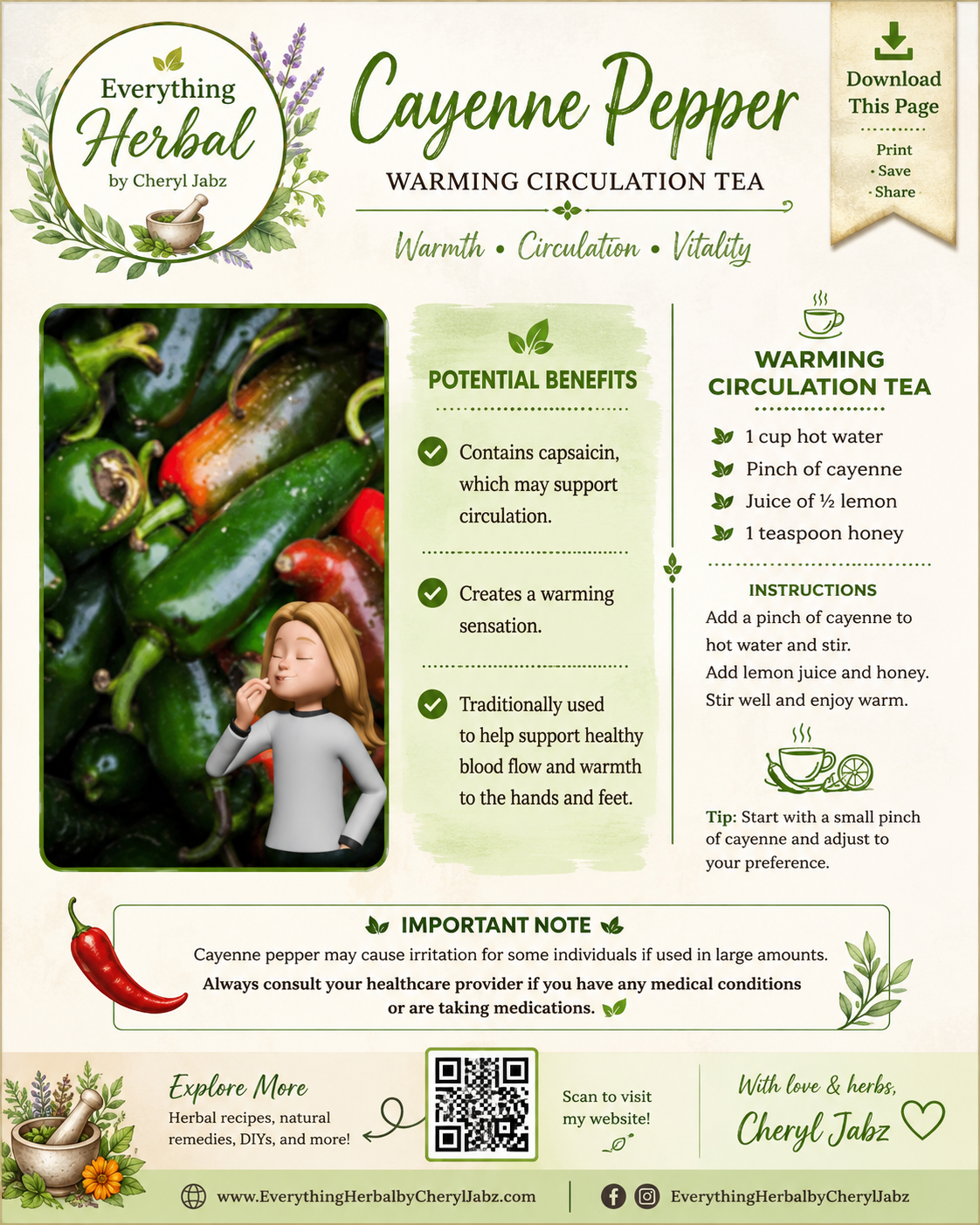
Cayenne Pepper Tea
Cayenne Pepper Warming Circulation Tea is a spicy, comforting blend of cayenne, lemon, honey, and hot water. It offers a warming sensation and is traditionally enjoyed to support healthy circulation, especially in the hands and feet.
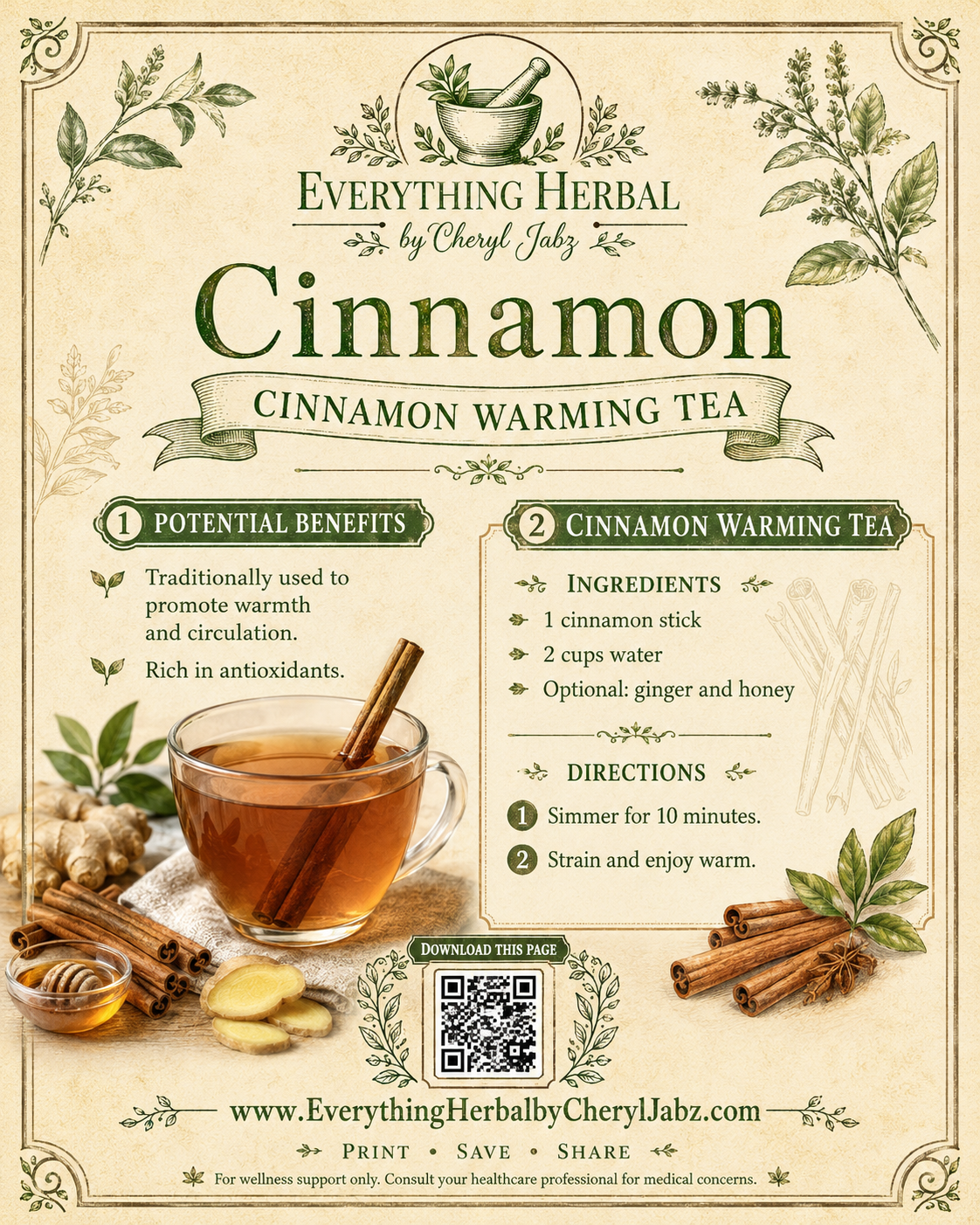
Cinnamon Warming Tea
Cinnamon Warming Tea is a cozy, aromatic drink made with a cinnamon stick and optional ginger and honey. It has a naturally warm, lightly spiced flavor and is traditionally enjoyed for comfort and circulation support.
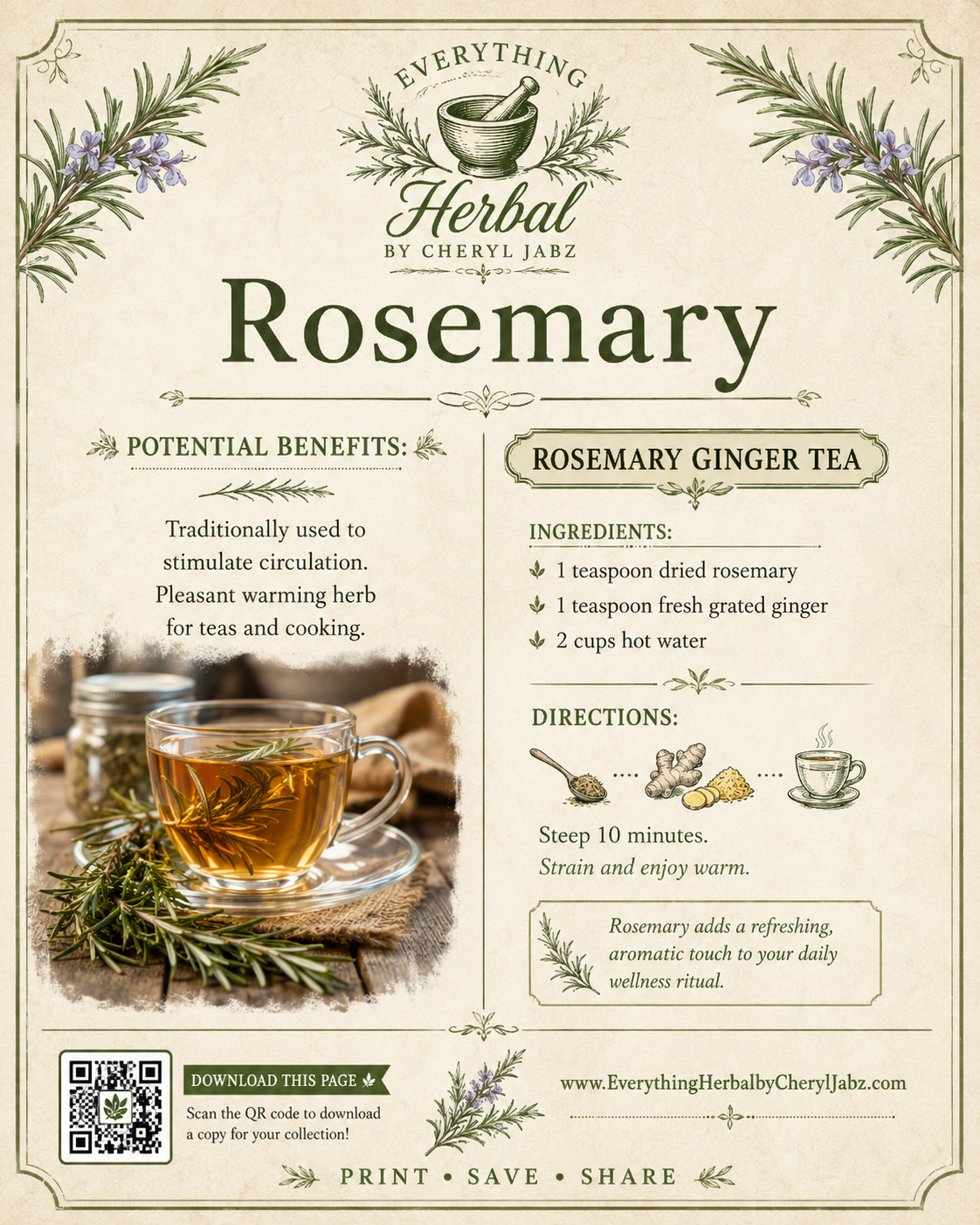
Rosemary Ginger Tea
Rosemary Ginger Tea is a warm, aromatic blend with earthy rosemary and spicy ginger. It is traditionally enjoyed to promote warmth, comfort, and healthy circulation.
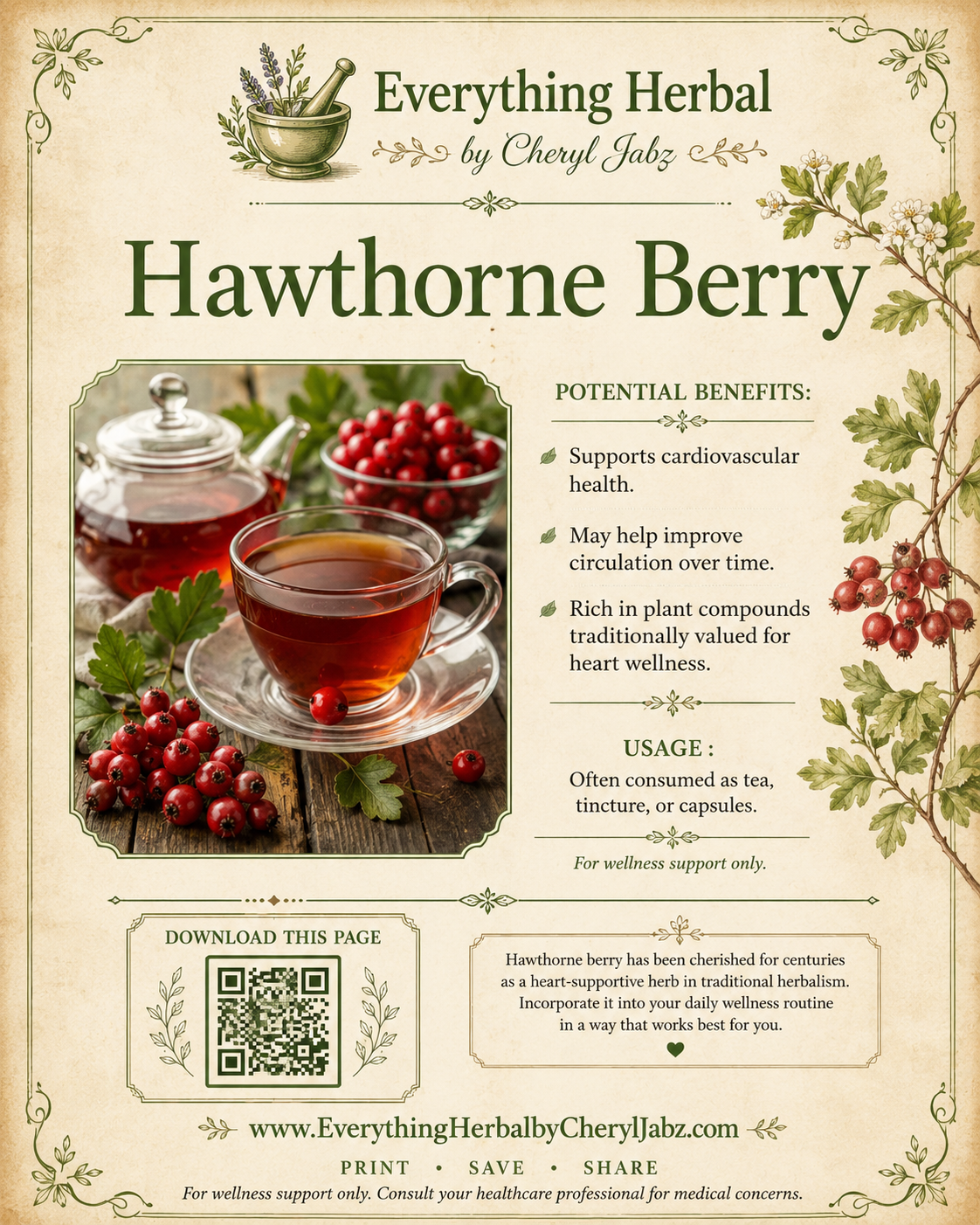
Hawthorne Berry Tea
Hawthorne Berry Tea is a mild, fruity herbal drink traditionally enjoyed for heart and circulation support. It can be served warm with optional honey or lemon. Anyone with a heart condition or taking heart medication should check with a healthcare professional before using it.
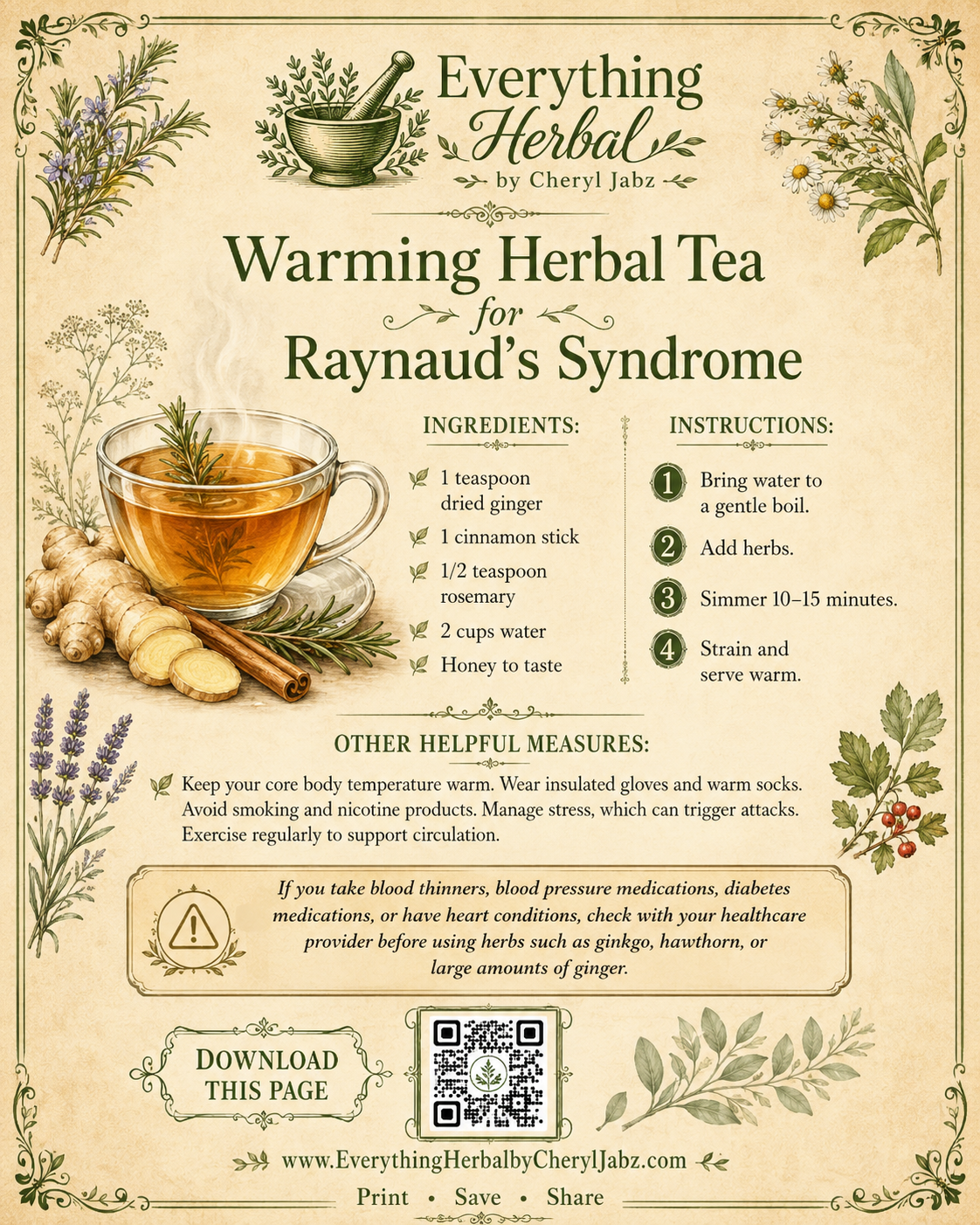
Warming Herbal Tea for Reynaud's Syndrome
Warming Herbal Tea for Raynaud’s Syndrome combines ginger, cinnamon, rosemary, and honey in a comforting, gently spiced drink. It is traditionally enjoyed to promote warmth and support circulation, especially during cold weather.
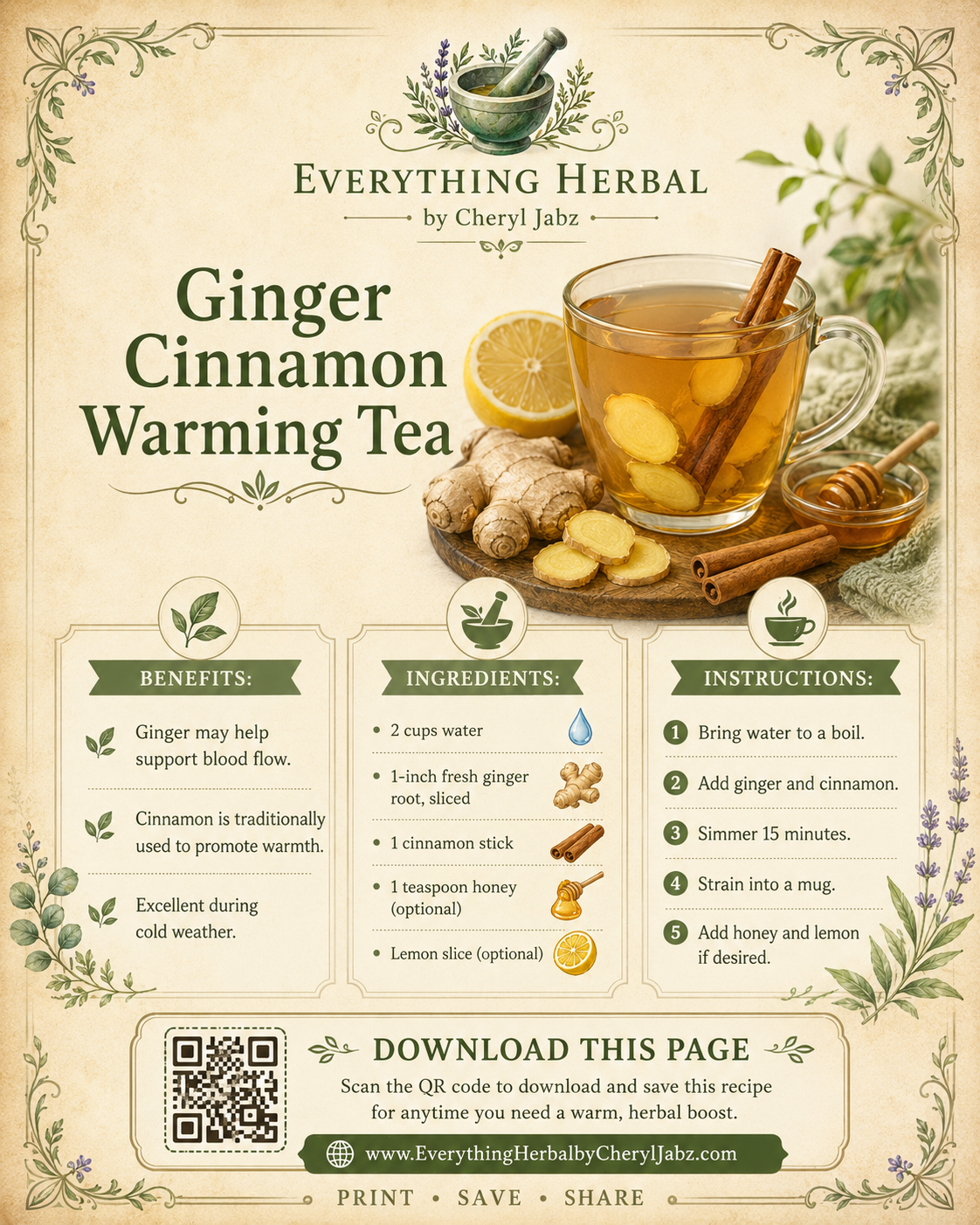
Ginger Cinnamon Warming Tea
Ginger Cinnamon Warming Tea is a cozy, gently spiced drink made with fresh ginger, cinnamon, optional honey, and lemon. It is especially comforting during cold weather and traditionally enjoyed to promote warmth and support circulation.
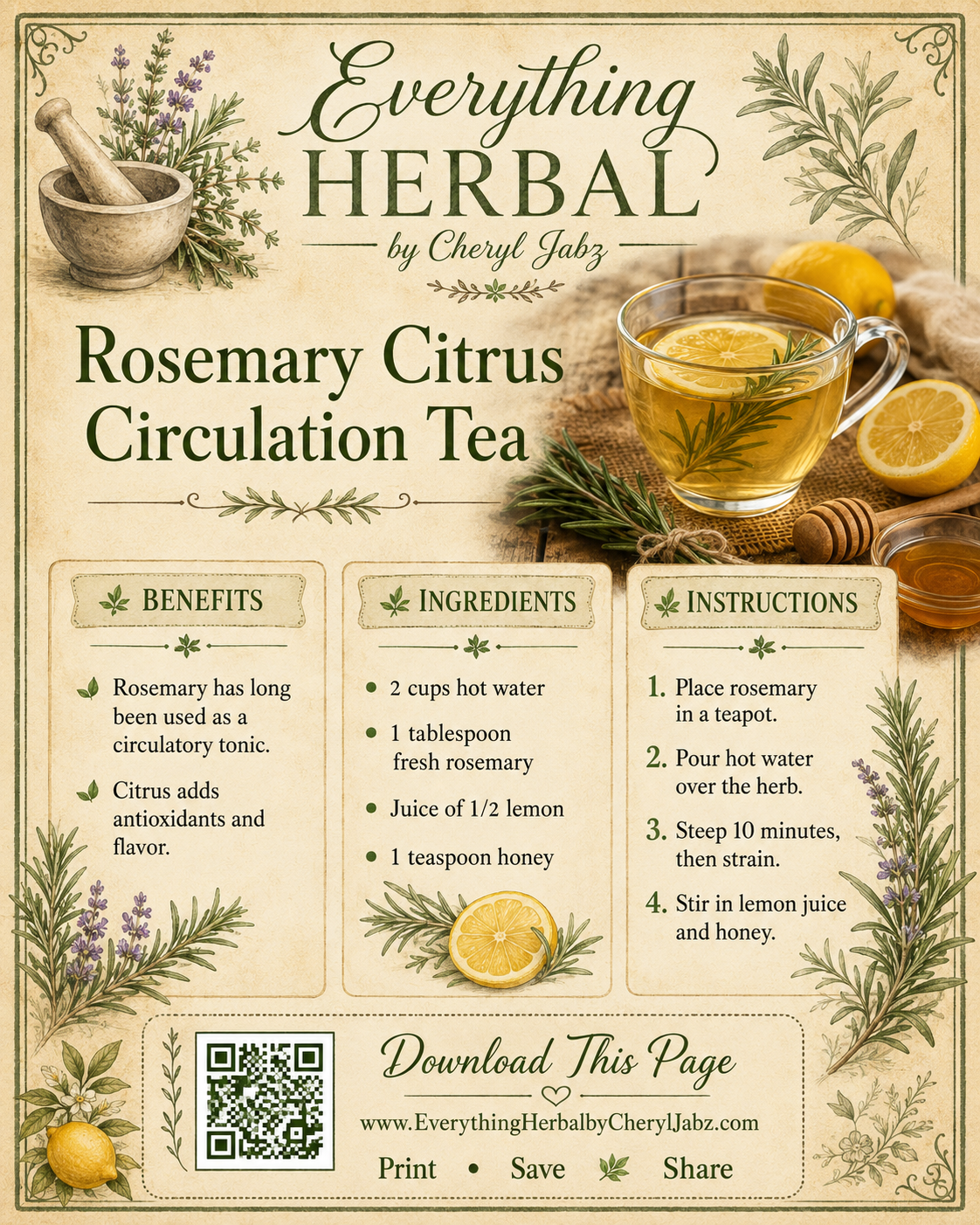
Rosemary Citrus Circulation Tea
Rosemary Citrus Circulation Tea is a bright, aromatic blend of fresh rosemary, lemon, and honey. It has an herbal-citrus flavor and is traditionally enjoyed warm to support comfort and healthy circulation.
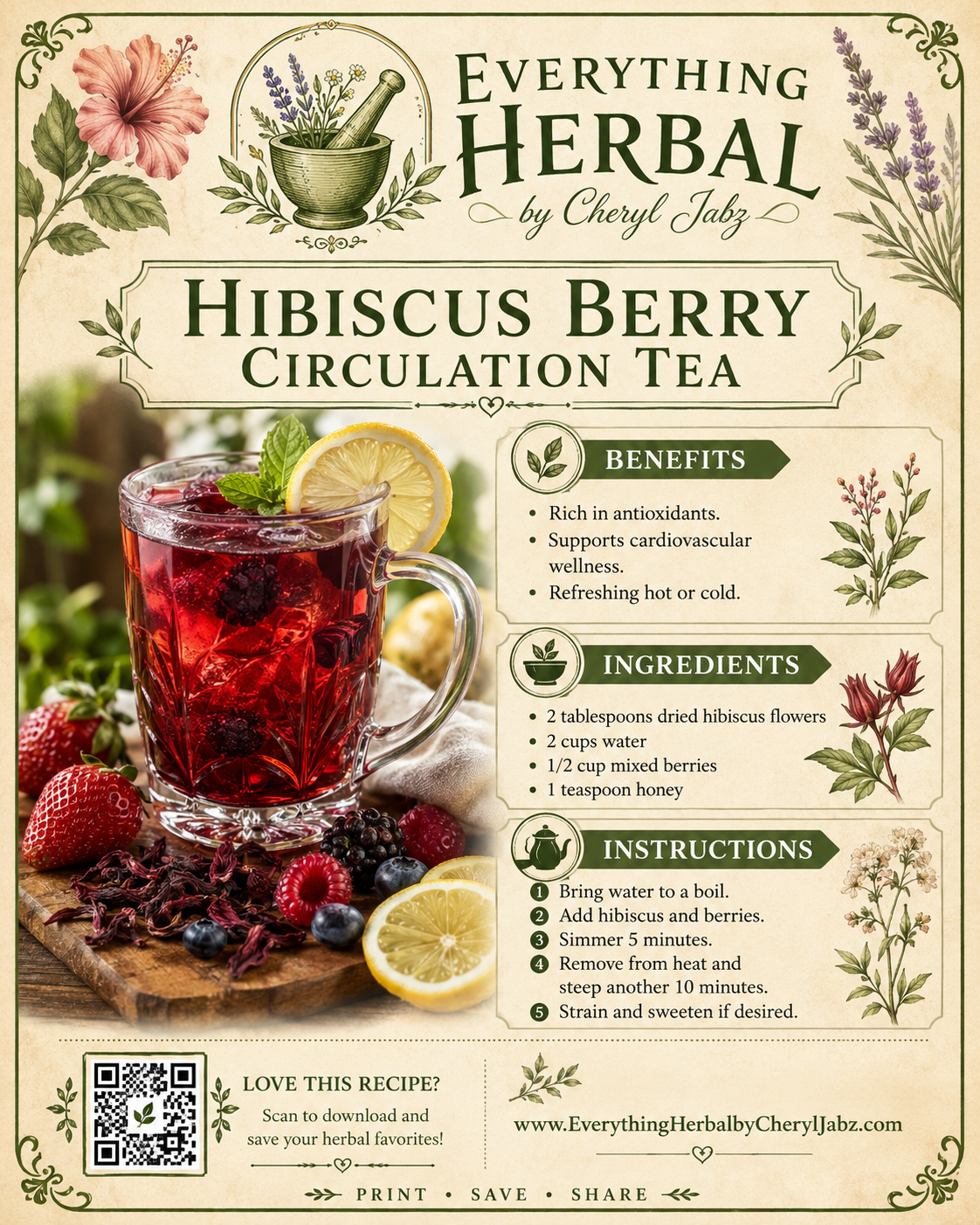
Hibiscus Berry Circulation Tea
Hibiscus Berry Circulation Tea is a bright, fruity herbal drink made with hibiscus flowers, mixed berries, and optional honey. It is refreshing hot or cold and traditionally enjoyed for antioxidant and cardiovascular wellness support.
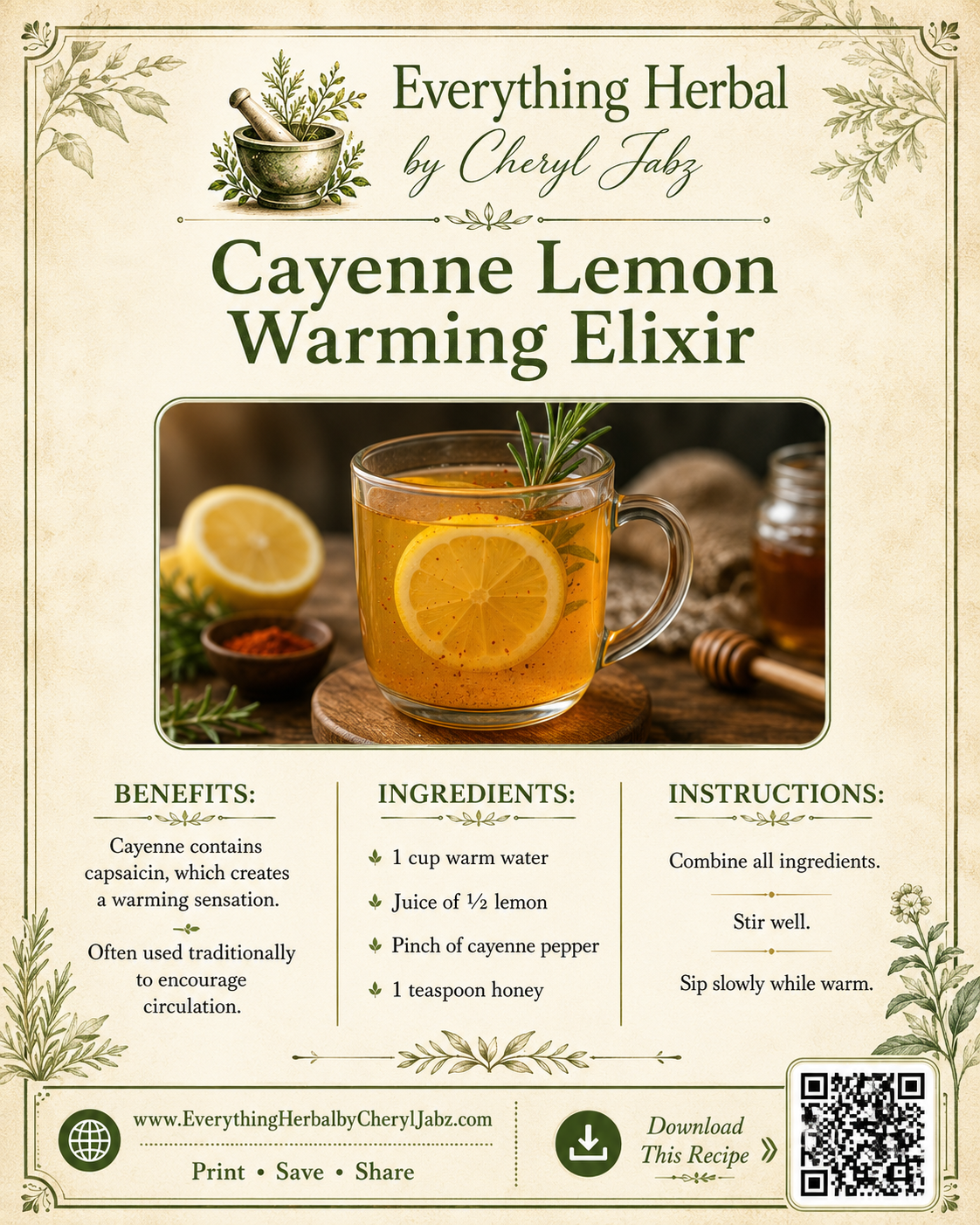
Cayenne Lemon Warming Elixir
Cayenne Lemon Warming Elixir is a bright, spicy drink made with warm water, lemon, honey, and a small pinch of cayenne. It provides a gentle warming sensation and is traditionally enjoyed for comfort and circulation support.