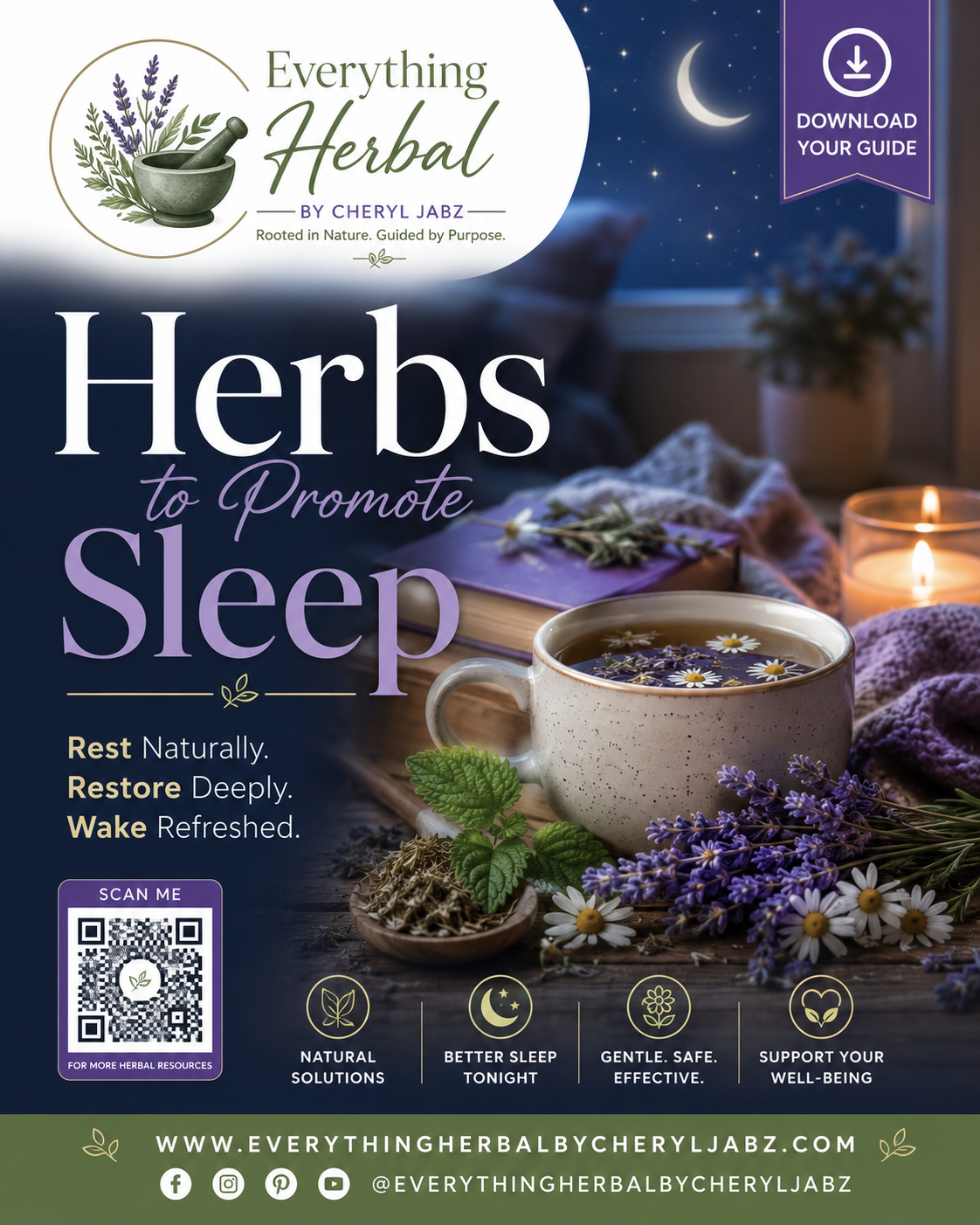
Herbs that promote SLEEP

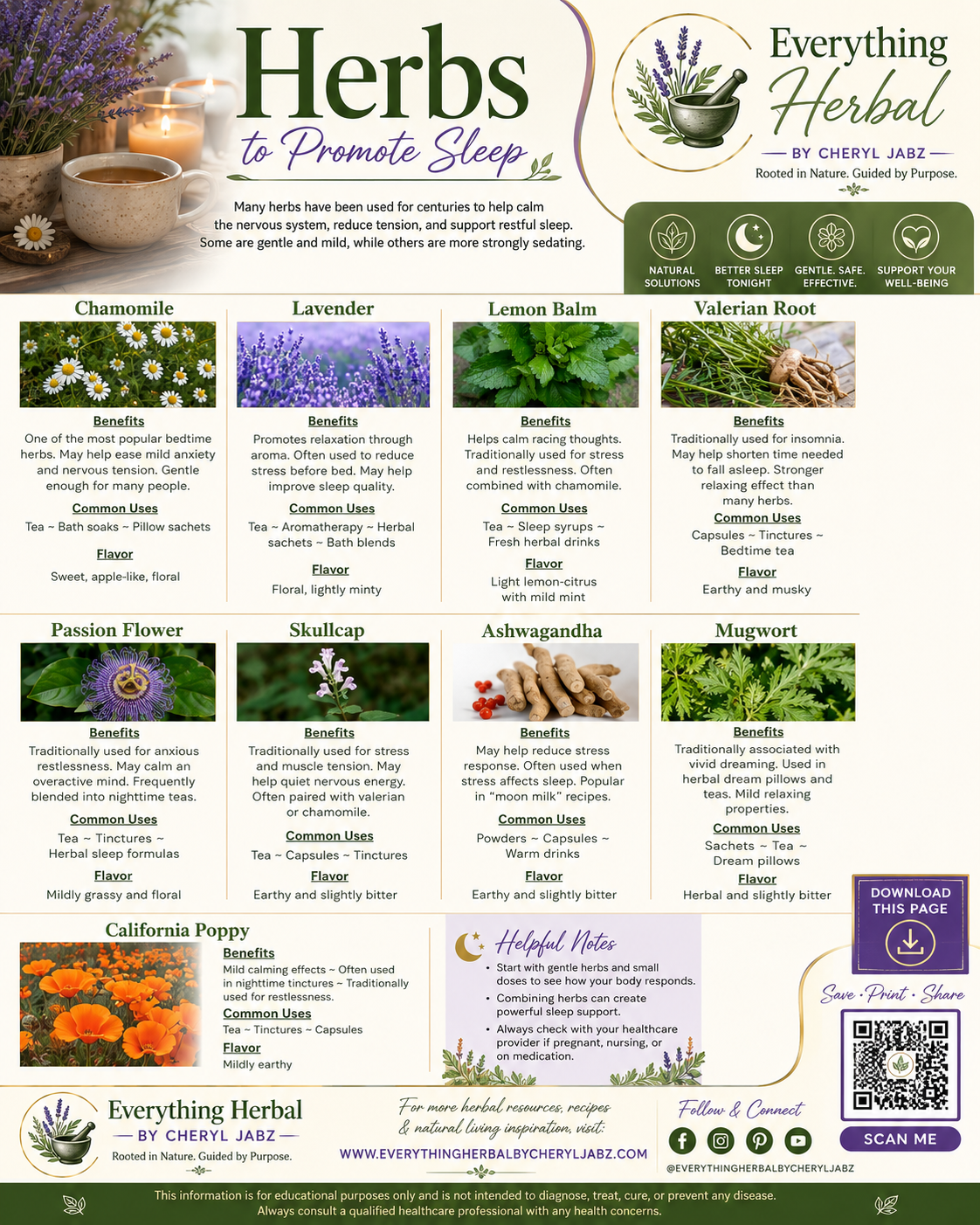
Many herbs have been used for centuries to help calm the nervous system, reduce tension, and support restful sleep. Some are gentle and mild, while others are more strongly sedating.

Chamomile

Benefits

One of the most popular bedtime herbs. May help ease mild anxiety and nervous tension. Gentle enough for many people.

Common Uses

Tea ~ Bath soaks ~ Pillow sachets

Flavor

Sweet, apple-like, floral

Lavender

Benefits

Promotes relaxation through aroma. Often used to reduce stress before bed. May help improve sleep quality.

Common Uses

Tea ~ Aromatherapy ~ Herbal sachets ~ Bath blends

Flavor

Floral, lightly minty

Lemon Balm

Benefits

Helps calm racing thoughts. Traditionally used for stress and restlessness. Often combined with chamomile.

Common Uses

Tea ~ Sleep syrups ~ Fresh herbal drinks

Flavor

Light lemon-citrus with mild mint

Valerian Root

Benefits

Traditionally used for insomnia. May help shorten time needed to fall asleep. Stronger relaxing effect than many herbs.

Common Uses

Capsules ~ Tinctures ~ Bedtime tea

Flavor

Earthy and musky.

Passion Flower

Benefits

Traditionally used for anxious restlessness. May calm an overactive mind. Frequently blended into nighttime teas.

Common Uses

Tea ~ Tinctures ~ Herbal sleep formulas

Flavor

Mildly grassy and floral

Skullcap

Benefits

Traditionally used for stress and muscle tension. May help quiet nervous energy. Often paired with valerian or chamomile.

Common Uses

Tea ~ Capsules ~ Tinctures

Flavor

Earthy and slightly bitter

NOTEValerian Root Can cause vivid dreams or morning grogginess in some people.


Ashwagandha

Benefits

May help reduce stress response. Often used when stress affects sleep. Popular in “moon milk” recipes.

Common Uses

Powders ~ Capsules ~ Warm drinks

Flavor

Earthy and slightly bitter


Mugwort

Benefits

Traditionally associated with vivid dreaming. Used in herbal dream pillows and teas. Mild relaxing properties.

Common Uses

Sachets ~ Tea ~ Dream pillows

Flavor Herbal and slightly bitter

California Poppy

Benefits

Mild calming effects ~ Often used in nighttime tinctures ~ Traditionally used for restlessness.

Common Uses

Tea ~ Tinctures ~ Capsules

Flavor

Mildly earthy

NOTE: Mugwort is not recommended during pregnancy.

Herbal Recipes to Promote Sleep

These recipes feature calming herbs traditionally used to support relaxation and restful sleep.

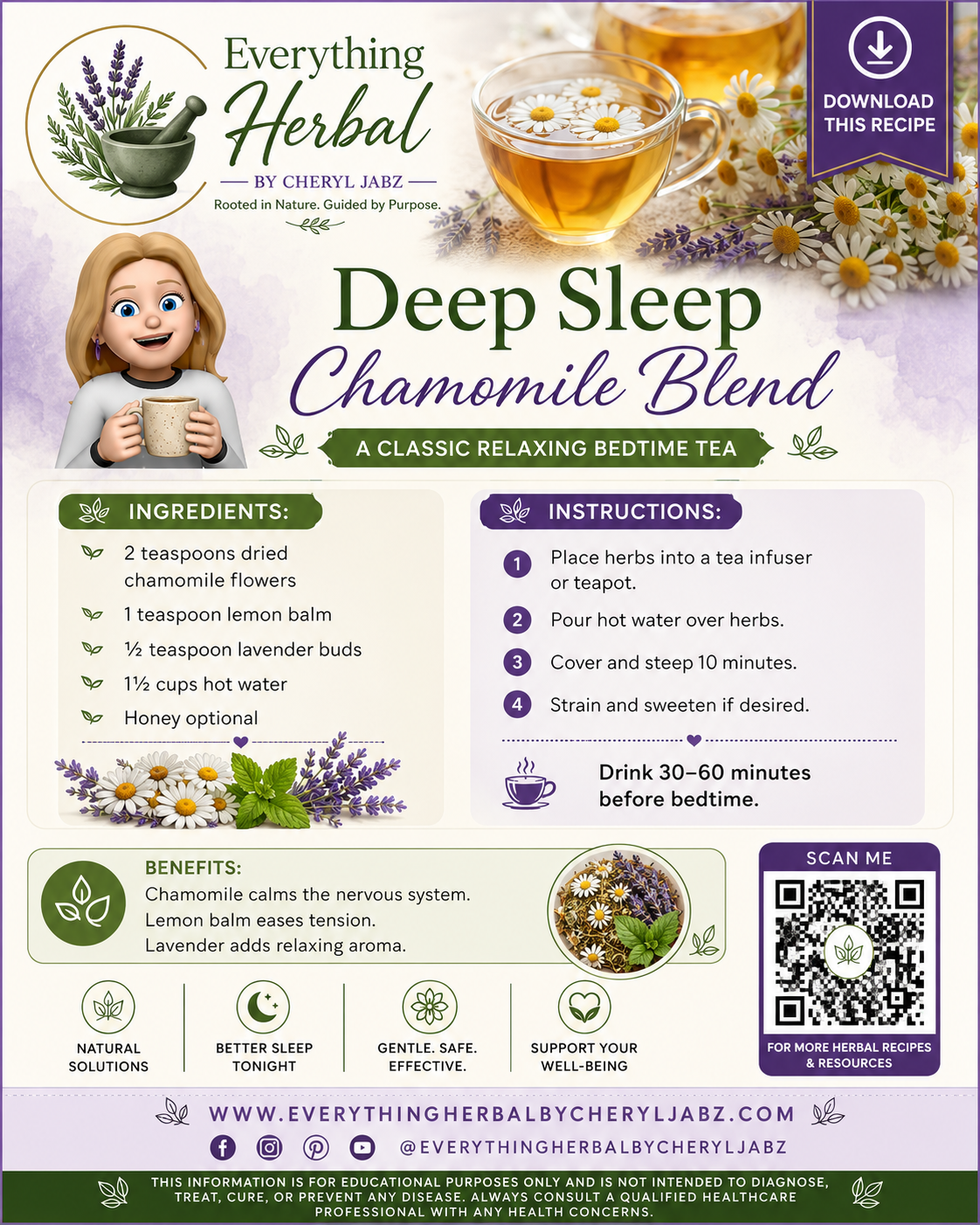
Deep Sleep Chamomile Blend

A classic relaxing bedtime tea.

INGREDIENTS:

2 teaspoons dried chamomile flowers

1 teaspoon lemon balm

½ teaspoon lavender buds

1½ cups hot water. Honey optional

INSTRUCTIONS:

Place herbs into a tea infuser or teapot. Pour hot water over herbs. Cover and steep 10 minutes. Strain and sweeten if desired.

Drink 30–60 minutes before bedtime.

BENEFITSChamomile calms the nervous system. Lemon balm eases tension. Lavender adds relaxing aroma.

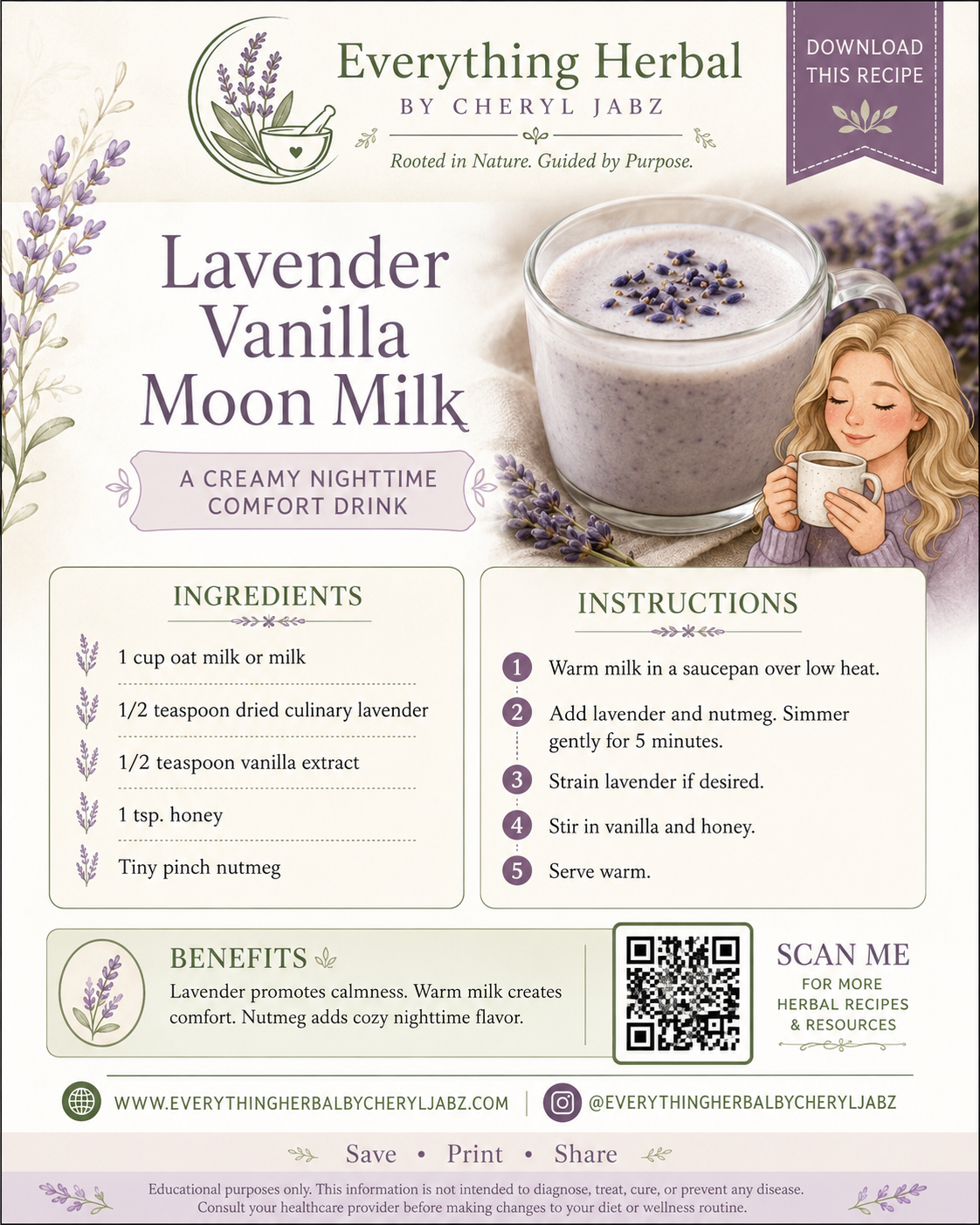
Lavender Vanilla Moon Milk

A creamy nighttime comfort drink.

INGREDIENTS:

1 cup oat milk or milk

½ teaspoon dried culinary lavender

½ teaspoon vanilla extract

1 tsp. honey ~ Tiny pinch nutmeg 

INSTRUCTIONS:

Warm milk in a saucepan over low heat. Add lavender and nutmeg. Simmer gently for 5 minutes.

Strain lavender if desired.

Stir in vanilla and honey. ~ Serve warm.

BENEFITSLavender promotes calmness. Warm milk creates comfort. Nutmeg adds cozy nighttime flavor.

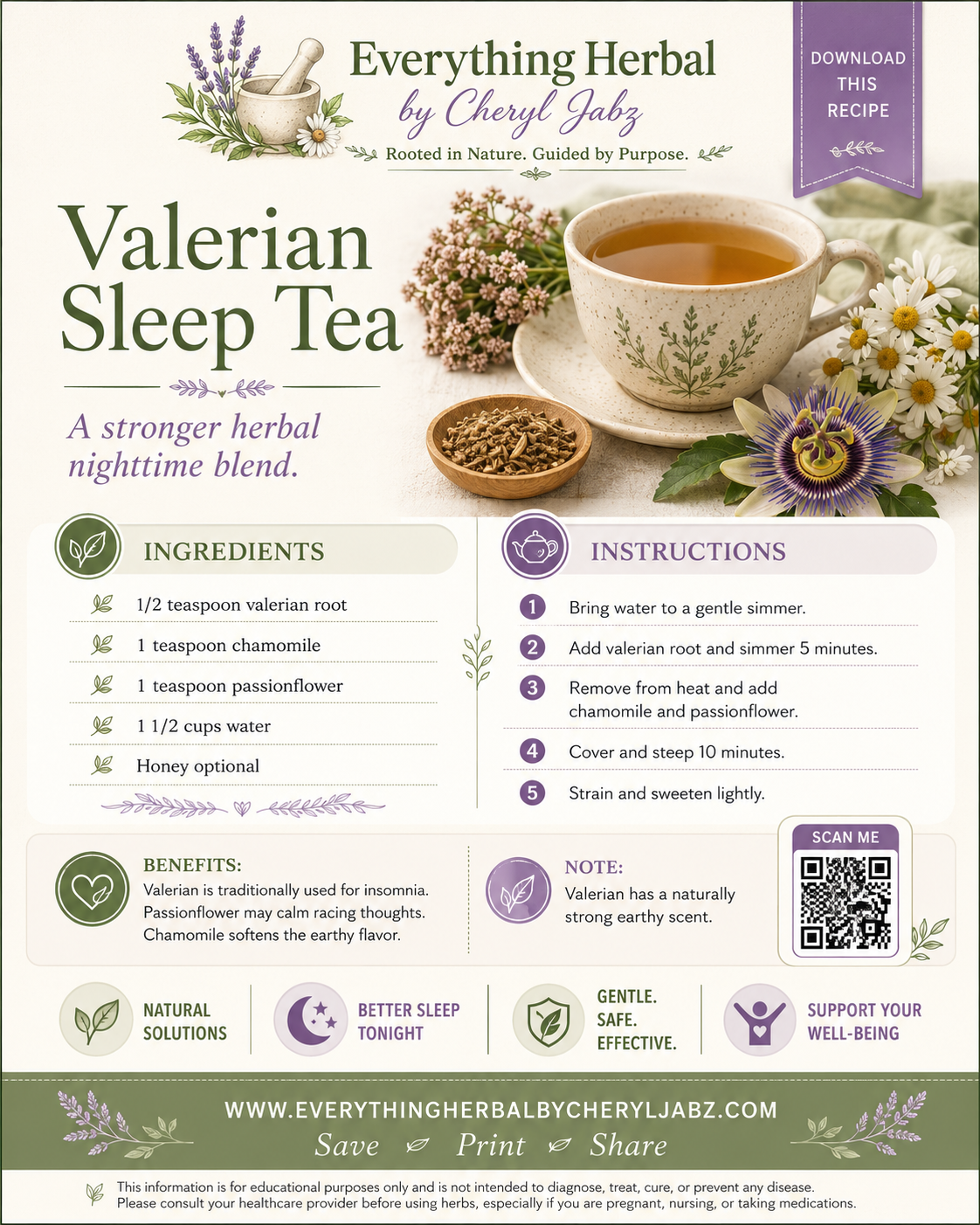
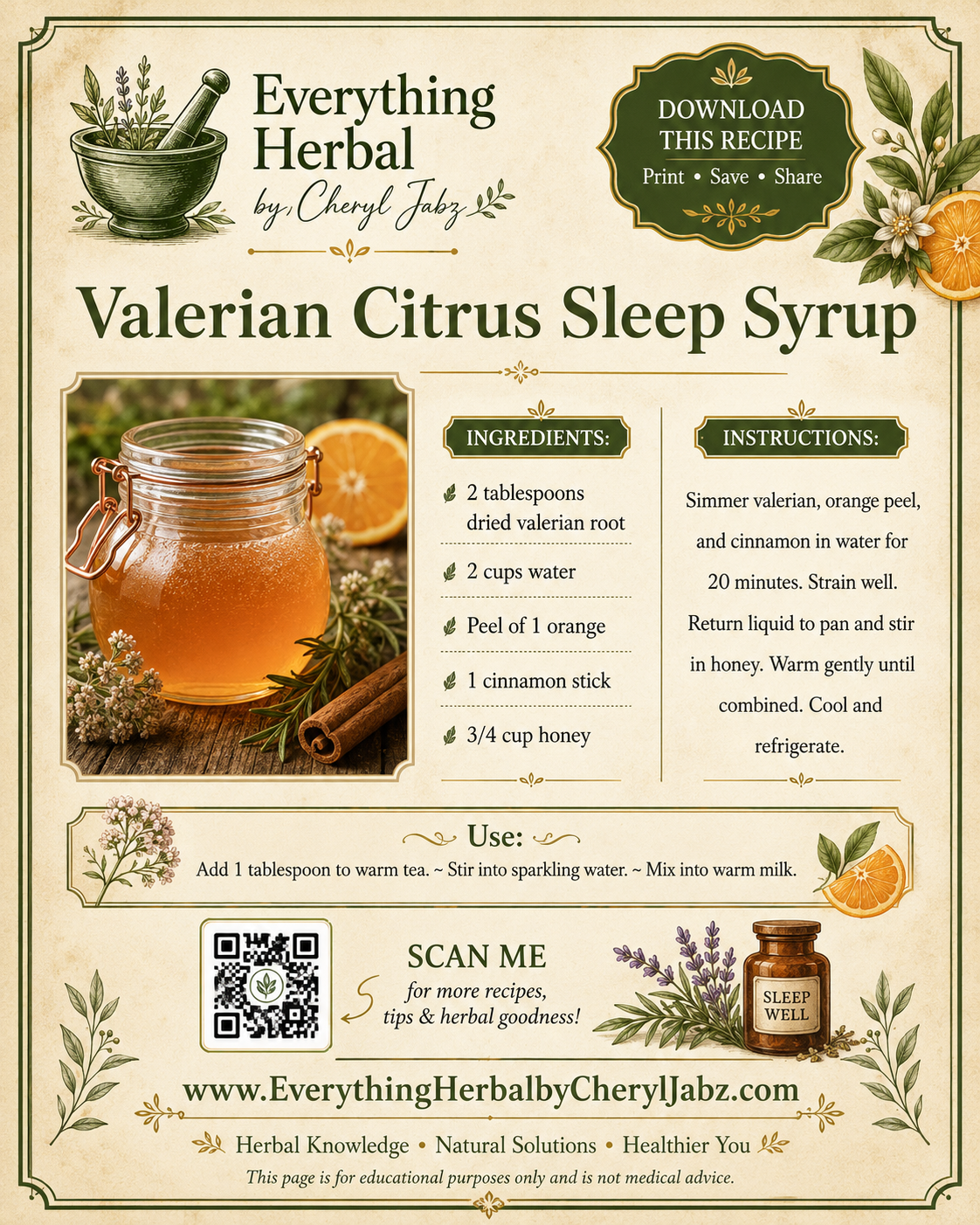
Valerian Sleep Tea

A stronger herbal nighttime blend.

INGREDIENTS:

½ teaspoon valerian root

1 teaspoon chamomile

1 teaspoon passionflower

1½ cups water

Honey optional

INSTRUCTIONS:

Bring water to a gentle simmer. Add valerian root and simmer 5 minutes. Remove from heat and add chamomile and passionflower. Cover and steep 10 minutes. Strain and sweeten lightly.

BENEFITSValerian is traditionally used for insomnia. Passionflower may calm racing thoughts. Chamomile softens the earthy flavor.

NOTEValerian has a naturally strong earthy scent.

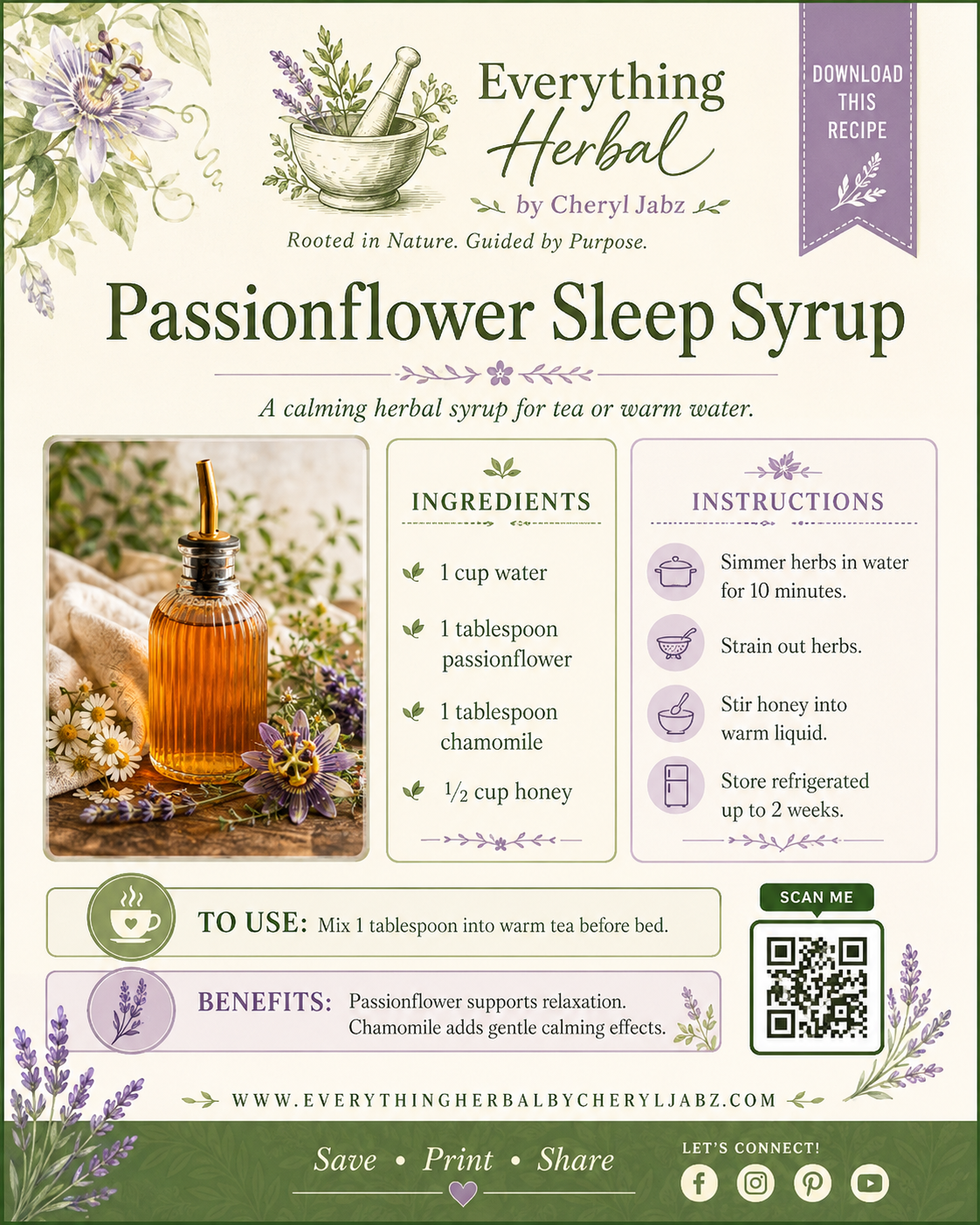
Passionflower Sleep Syrup

A calming herbal syrup for tea or warm water.

INGREDIENTS:

1 cup water

1 tablespoon passionflower

1 tablespoon chamomile

½ cup honey

INSTRUCTIONS:

Simmer herbs in water for 10 minutes.

Strain out herbs.

Stir honey into warm liquid.

Store refrigerated up to 2 weeks.

To Use:  Mix 1 tablespoon into warm tea before bed.

BENEFITSPassionflower supports relaxation. Chamomile adds gentle calming effects.

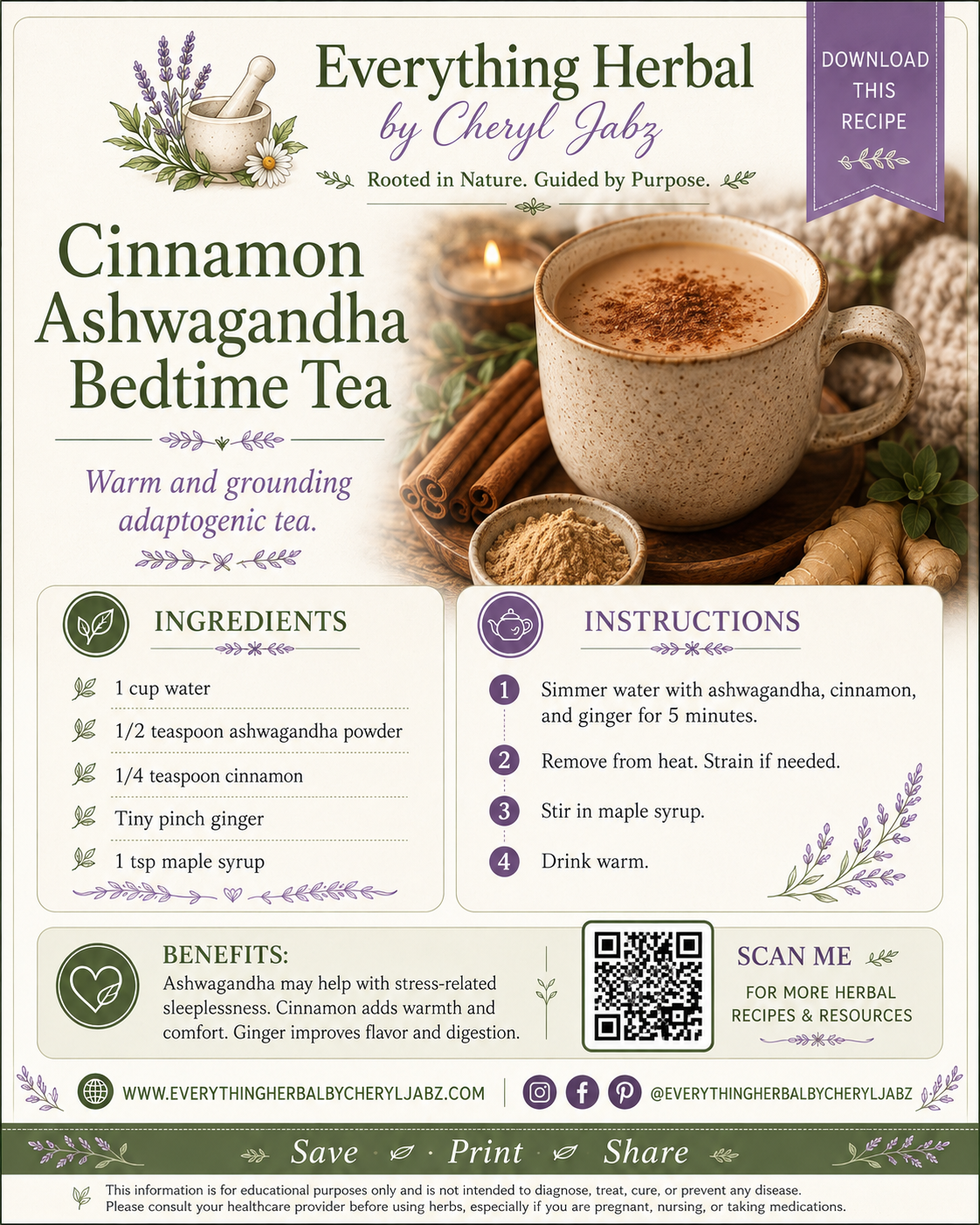
Cinnamon Ashwagandha Bedtime Tea

Warm and grounding adaptogenic tea.

INGREDIENTS:

1 cup water

½ teaspoon ashwagandha powder

¼ teaspoon cinnamon

Tiny pinch ginger ~ 1 tsp maple syrup

INSTRUCTIONS:

Simmer water with ashwagandha, cinnamon, and ginger for 5 minutes.

Remove from heat. Strain if needed. Stir in maple syrup. Drink warm.

BENEFITSAshwagandha may help with stress-related sleeplessness. Cinnamon adds warmth and comfort. Ginger improves flavor and digestion.

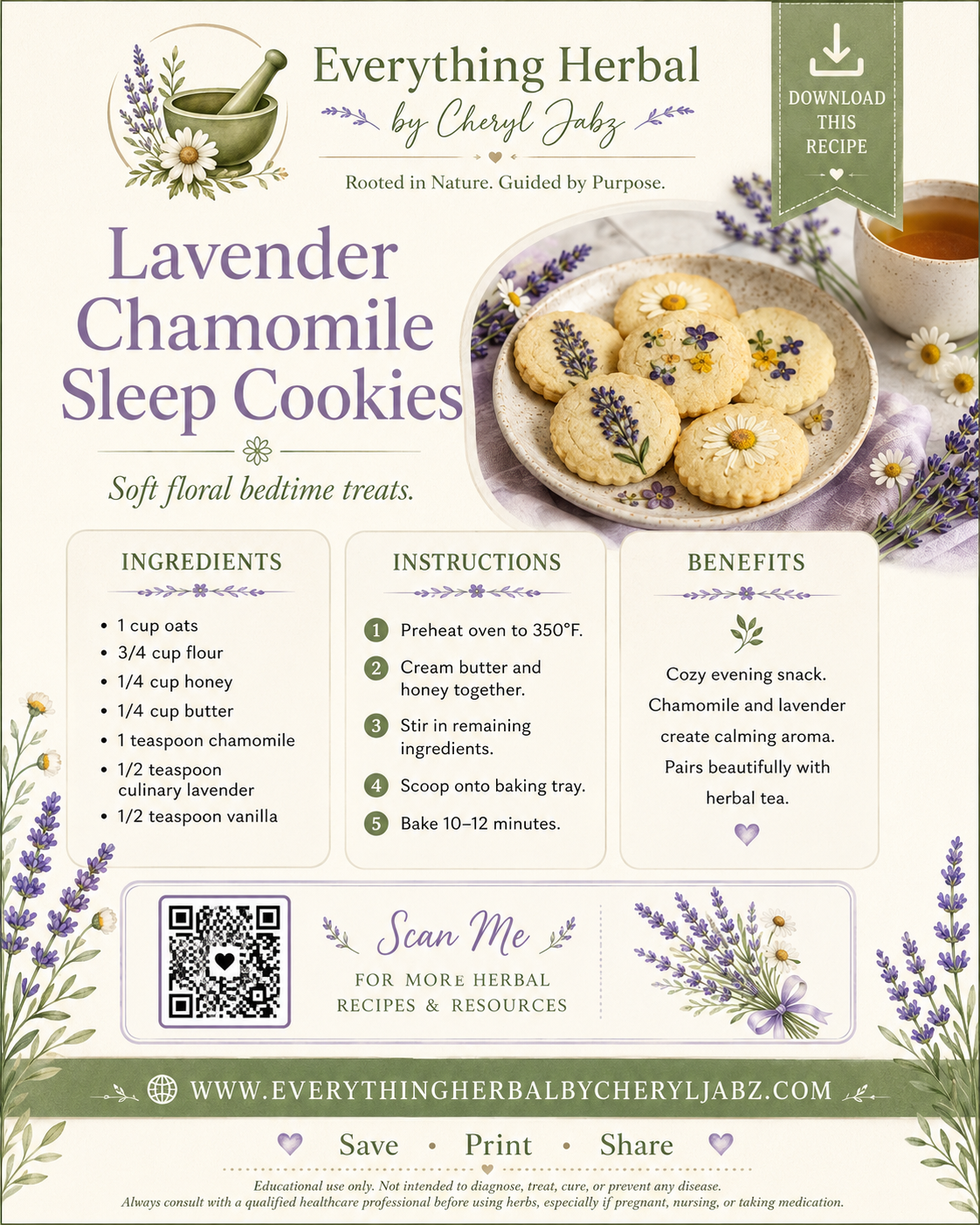
Lavender Chamomile Sleep Cookies

Soft floral bedtime treats.

INGREDIENTS:

1 cup oats ~ ¾ cup flour

¼ cup honey ~ ¼ cup butter

1 teaspoon chamomile

½ teaspoon culinary lavender

½ teaspoon vanilla

INSTRUCTIONS:

Preheat oven to 350°F.

Cream butter and honey together.

Stir in remaining ingredients.

Scoop onto baking tray. Bake 10–12 minutes.

BENEFITSCozy evening snack. Chamomile and lavender create calming aroma. Pairs beautifully with herbal tea.

Herbal Effects on Sleep and Restless Leg Syndrome

A peaceful night of sleep is essential for physical health, emotional balance, and mental clarity. Yet millions of people struggle with insomnia, restless sleep, or the uncomfortable sensations caused by Restless Leg Syndrome (RLS). While modern medicine offers treatments, many individuals are turning to herbs and natural remedies to support relaxation, improve sleep quality, and calm restless legs naturally.

Read more »